
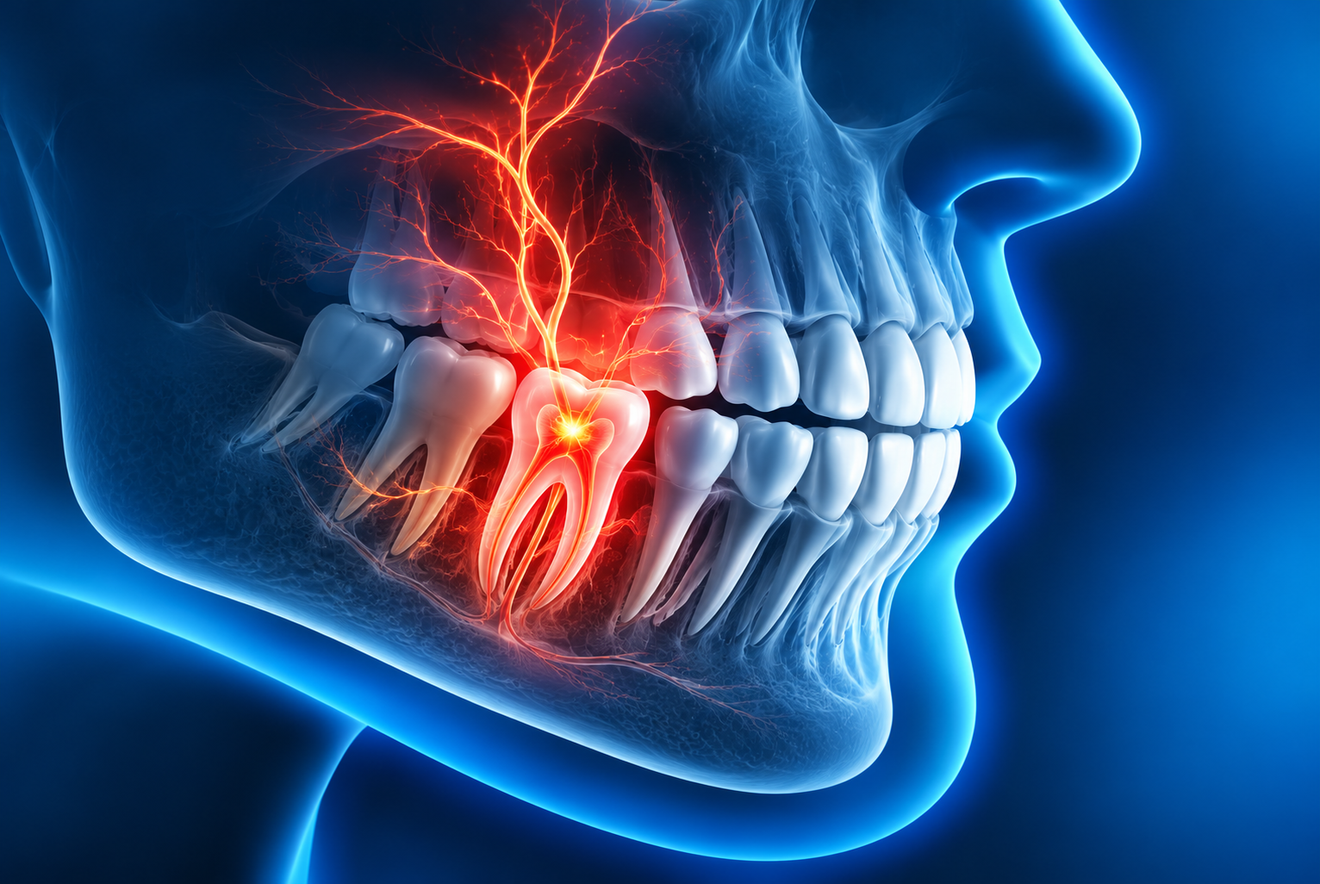
Most people know the feeling. A sharp pain when biting down, a throbbing tooth that keeps you up at night, or that sudden jolt of sensitivity after taking a sip of ice-cold water. Toothaches are hard to ignore, and for some people, the experience can leave a lasting impression, making the thought of another dental visit almost as unpleasant as the pain itself. Fortunately, modern dentistry has come a long way in making these experiences more manageable. But the effort to separate dentistry from pain is nothing new.
Dentistry’s Long Battle With Pain
In 1844, an American dentist named Horace Wells witnessed something unusual. While attending a public demonstration of nitrous oxide, commonly known as laughing gas, he watched a man injure his leg without appearing to feel any pain. The demonstration led Wells to consider whether nitrous oxide could also relieve pain during dental procedures (Mistry et al., 2024).

On December 11, 1844, he decided to test his theory on himself. After inhaling nitrous oxide, Wells had one of his wisdom teeth extracted by another dentist. His experiment would become an important milestone in the history of dental anesthesia (Mistry et al., 2024). Today, it’s difficult to imagine having a tooth extracted without some form of anesthesia. But innovations like Wells’s didn’t just make dental procedures easier for dentists. More importantly, they changed what receiving dental care could feel like for patients.
Since then, dentistry has developed numerous ways to manage pain, from local anesthetics and anti-inflammatory medications to procedures like root canal therapy that address the underlying source of a toothache. Now researchers are beginning to wonder how they can take this a step further. The new question has become: Rather than waiting until a tooth becomes painful, what if we could engineer ways to protect its living tissues, control inflammation, and even help those tissues heal? That’s where bioengineering comes into play.
Why Does Your Tooth Ache?
Before discussing the innovations, it is important to understand what’s happening inside a painful tooth. Beneath the hard layers of enamel and dentin lies the dental pulp, a soft tissue containing blood vessels, immune cells, and a dense network of sensory nerves (Sacerdote & Levrini, 2012). When a tooth becomes damaged by decay, trauma, or infection, the pulp can develop an inflammatory response, which is part of the body’s natural defense system. However, this process can create problems. Inflammation releases chemical signals that affect nearby sensory nerves, sometimes making them increasingly sensitive to stimulation. This process is known as peripheral sensitization. In simpler terms, the nerves can become easier to activate, and something that previously caused slight discomfort may suddenly become extremely painful (Sacerdote & Levrini, 2012).

Researchers have identified several molecular sensors that help nerves respond to damaging stimuli and inflammation. When these sensors become more sensitive, even everyday sensations like temperature changes can trigger a stronger pain response (Chantadul et al., 2025). Understanding this relationship between inflammation and nerve sensitivity has opened the door to new approaches for investigating dental pain.
While traditional approaches have allowed dentists to effectively manage dental pain, bioengineers are exploring how they can design materials that interact with the living tissues inside the teeth to control inflammation and support healing before the damage becomes irreversible. Instead of relieving pain, the idea is to target the biological processes contributing to it.
What If a Dental Material Could Help Fight Inflammation?
When we think about dental materials, fillings and crowns likely come to mind. Their main purpose is to restore and protect damaged tooth structures. But what if a material could actively help the tissue underneath recover?
In a 2025 study published on an experimental treatment for pulpitis, researchers investigated a material designed to do just that. The team developed an injectable, temperature-sensitive hydrogel containing Prussian blue nanoparticles (Zhang et al., 2025).
A hydrogel is a water-rich material that can be engineered to carry therapeutic substances. In this case, the researchers designed it to form a gel at body temperature, allowing it to remain near the damaged pulp tissue. The nanoparticles inside were intended to reduce oxidative stress, a process that can contribute to inflammation and tissue damage. Instead of simply covering the affected area, the material was designed to interact with the surrounding tissue and help create conditions more favorable for healing (Zhang et al., 2025).

In laboratory experiments and a rat model of pulpitis, the researchers found encouraging results, including less inflammation and tissue damage (Zhang et al., 2025). While these findings are promising, the study did not directly measure pain reduction, and the treatment has yet to be tested in patients. So, we’re still a long way from knowing whether this approach could actually prevent toothaches.
Even so, the study represents a promising step toward treating inflammation earlier, potentially preserving the dental pulp before more extensive treatment becomes necessary.
Maybe My Toothache Is Useful…
While reducing dental pain is an exciting possibility, eliminating it entirely may not be the answer.
As unpleasant as pain can be, it serves an important purpose. It’s one of the body’s ways of warning us that something may be wrong. Without the ability to detect potentially damaging stimuli, a tooth could lose an important part of its protective sensory function (Wei et al., 2022).
So perhaps the goal shouldn’t be to create teeth that are incapable of hurting. Instead, the challenge may be finding ways to control inflammation while preserving the living tissues and sensations that help protect our teeth.
But what happens when the pulp is already too damaged to save?
While some researchers are developing materials to protect existing pulp tissue, others are investigating whether lost pulp tissue could one day be regenerated.
What If We Could Regrow the Living Tissue Inside a Tooth?
When the pulp inside a tooth becomes irreversibly damaged or dies, root canal treatment can preserve the tooth by removing the affected tissue, disinfecting the canals, and sealing the space. While effective, this treatment does not restore the living pulp.
Regenerative endodontics explores whether that lost tissue could instead be regenerated. Researchers are investigating approaches involving stem cells, engineered scaffolds, and biological signaling molecules to encourage new tissue growth. Stem cells are particularly important because they can develop into specialized cells that help form different tissues (Wei et al., 2022).

For a closer look at the science behind these approaches, the Tooth Engineers explore how stem cells can be used to regenerate tissues in our podcast episode, The Science Behind Engineered Tissues.
But regenerating dental pulp involves more than growing new cells. Healthy pulp also needs blood vessels to deliver nutrients and nerves that allow the tooth to respond to its surroundings. Rebuilding these connections remains one of the major challenges in regenerative endodontics (Wei et al., 2022).
Interestingly, the same nerves responsible for painful toothaches also serve an important protective purpose. They help alert us when something is wrong. For researchers working to regenerate dental pulp, restoring this sensory function is just as important as rebuilding the tissue itself. Some regenerative endodontic procedures are already used in selected cases, particularly in immature permanent teeth with dead pulp tissue. However, reliably restoring fully functional dental pulp, including its natural sensory abilities, remains a research goal (Paranjpe, 2026; Wei et al., 2022).
What Does a Future Without Dental Pain Actually Look Like?
Nearly two centuries ago, Horace Wells helped transform dentistry by demonstrating that dental procedures could be performed without pain. Today, bioengineering offers another opportunity to change how patients experience dental care.
Although much of this research remains experimental, its potential extends beyond relieving toothaches. By finding new ways to preserve and repair our natural teeth, researchers may eventually help patients avoid more invasive treatments altogether.
The future of dentistry may not be entirely pain-free, but it could be one where fewer patients have to experience that pain in the first place.
Check Out Our Other Blogs
Did you enjoy our article? We have more great content (links below)!
- Chipped a Tooth? Don’t Worry, Your Baby Teeth Will Save You!
- The Future of Facial Reconstruction: A Novel 3D Printing Service That Can Remodel Your Jaw!
- Need a Dental Implant? Just Regrow Your Teeth!
- Vaping is BAD for you and your teeth…right???
- Curodont: A New Way to Treat Cavities Without the Drill
- Dental Bioprinting: The Future of Dentistry?
- Salivary Glands: The Unsung Heroes of Oral Health
- The Teeth Whitening Powder! Future of Whitening?
- How Dental Biologics Are Shaping the Future of Dentistry?
- Gum Disease and The Heart… It’s Not A Loving Relationship
- Enamel Regeneration: A Dental Revolution on the Horizon
- Ozempic Teeth: From Waist Line To Gum Line
- Unveiling the Truth: Debunking Myths about Fluoride
- Be Wary of PRIME… It Could Ruin Your Teeth
- Hydrogen Peroxide Teeth Experiment: Be Careful With Whitening
- Dental Science Experiments: Hydrochloric Acid and Teeth
- Medium: What It Means To Be A Tooth Engineer
Follow Us!
If you liked this article, then please subscribe to our YouTube Channel and Medium Blog for more Tooth Engineers content. You can also find us on TikTok, Instagram and Facebook.
References
- Chantadul, V., Rotpenpian, N., Arayapisit, T., & Wanasuntronwong, A. (2025). Transient receptor potential channels in dental inflammation and pain perception: A comprehensive review. Heliyon, 11(2), e41730. https://doi.org/10.1016/j.heliyon.2025.e41730
- Mistry, L. N., Khachane, N. A., Shah, P. P., Soman, M., Neelkanthan, S., & Jawdekar, A. M. (2024). Horace Wells: A pioneer in modern anesthesia and pain-free medical practices. Cureus, 16(10), e71575. https://doi.org/10.7759/cureus.71575
- Paranjpe, A. (2026). Regenerative endodontics. American Association of Endodontists. https://www.aae.org/specialty/newsletter/regenerative-endodontics-2/
- Sacerdote, P., & Levrini, L. (2012). Peripheral mechanisms of dental pain: The role of substance P. Mediators of Inflammation, 2012, Article 951920. https://doi.org/10.1155/2012/951920
- Wei, Y., Lyu, P., Bi, R., Chen, X., Yu, Y., Li, Z., & Fan, Y. (2022). Neural regeneration in regenerative endodontic treatment: An overview and current trends. International Journal of Molecular Sciences, 23(24), 15492. https://doi.org/10.3390/ijms232415492
- Zhang, L., Ning, X., Cui, J., Zhao, Y., Xie, F., Zhu, N., Wang, D., Qin, M., Lin, Z., & Wang, Y. (2025). Thermosensitive injectable in situ forming hydrogel incorporating anti-oxidative stress and anti-inflammatory nanoparticles for vital pulp therapy of pulpitis. Materials Today Bio, 31, 101482. https://doi.org/10.1016/j.mtbio.2025.101482
Image Credits
- Dental Pain and Nerve Sensitivity. AI-generated medical illustration created using OpenAI’s ChatGPT (2026).
- Illustration of a Toothache. AI-generated illustration created using OpenAI’s ChatGPT (2026).
- Horace Wells (c. 1912). Steel engraving. Linda Hall Library. (2023, January 24). Horace Wells. Scientist of the Day. https://www.lindahall.org/about/news/scientist-of-the-day/horace-wells/
- A Bioengineered Hydrogel for Inflamed Dental Pulp. Original AI-generated scientific illustration created using OpenAI’s ChatGPT (2026). Based on the research of Zhang et al. (2025).
- Regenerative Endodontics and Dental Pulp Regeneration. Original AI-generated scientific illustration created using OpenAI’s ChatGPT (2026). Based on the research of Wei et al. (2022).


