
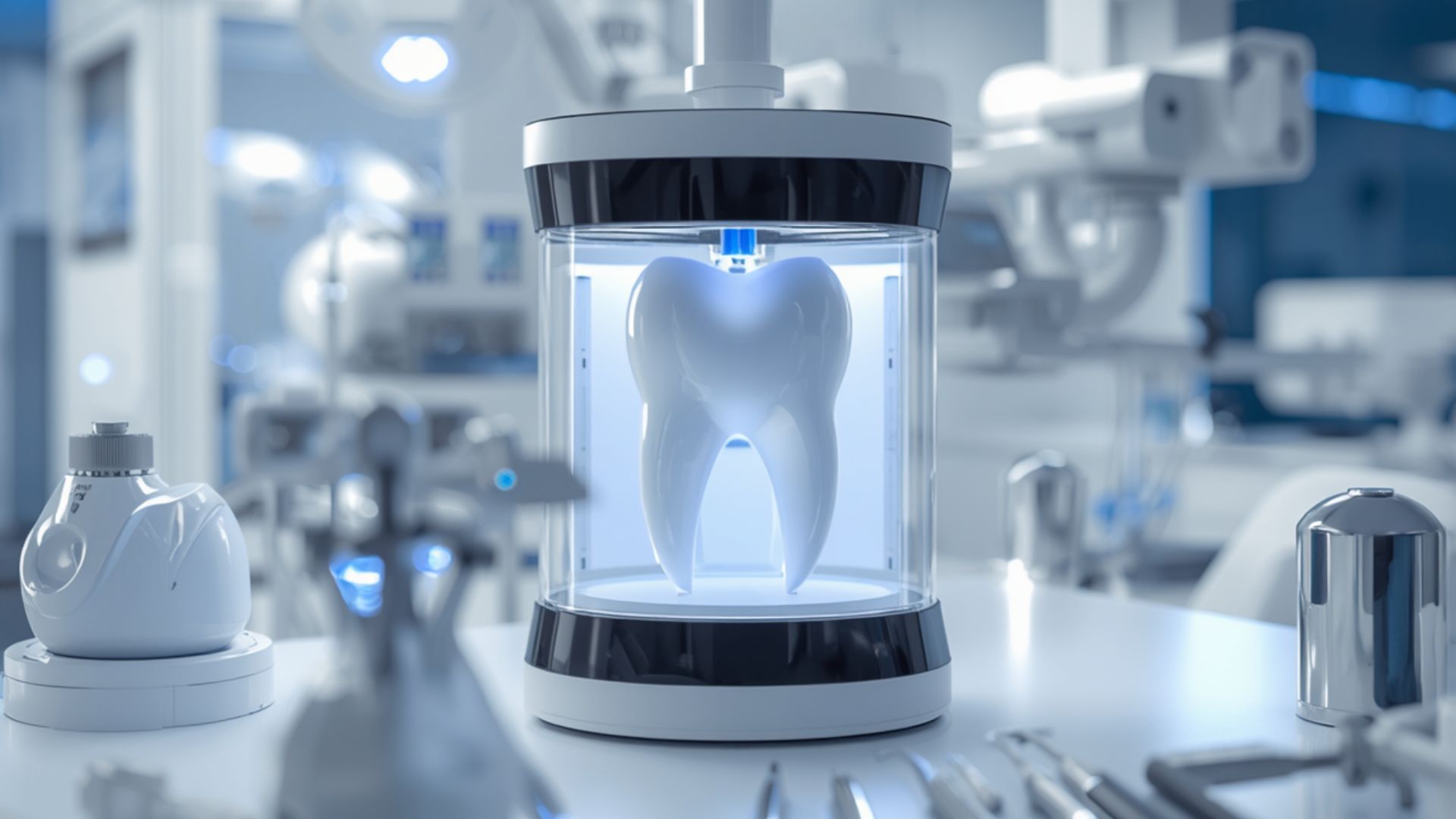
Imagine walking into a dental office with a damaged tooth or severe gum disease and, instead of receiving a traditional implant or synthetic graft, your dentist just “creates” living tissue designed specifically for your mouth. It sounds futuristic, but researchers are already exploring technologies that could make this possible. The future of dentistry is not centuries away, it’s almost here.
This emerging field is known as dental bioprinting — a combination of 3D printing, biology, and regenerative medicine aimed at rebuilding oral tissues using living cells. Scientists are studying ways to print gum tissue, bone, and even tooth-like structures that may one day behave much like natural stuctures.
Although the technology is still in its early stages, many experts believe it could reshape the future of dental care by making treatments more personalized, less invasive, and potentially more effective in the long term.
What Exactly Is Dental Bioprinting?
Most people are familiar with the regular 3D printers that create objects, layer by layer, using plastic or resin. Bioprinters work in a similar way, but instead of printing plastic materials, they use living cells mixed with specially designed biological substances known as “bio-inks.”
These bio-inks can contain:
- Living cells
- Hydrogels
- Proteins
- Nutrients
- Growth factors
The goal is to create structures that mimic natural oral tissues. In dentistry, researchers are exploring how bioprinting could help regenerate damaged gums, jawbone, ligaments, nerves, and possibly even entire teeth.
Unlike traditional restorations that replace missing structures with artificial materials, bioprinting focuses on encouraging the body to heal and rebuild itself more naturally.

Why is Dental Bioprinting considered Future of Dentistry?
Dental disease affects millions of people worldwide. Tooth loss, bone deterioration, gum disease, and oral injuries can significantly impact both health and quality of life.
Current dental treatments — including implants, crowns, dentures, and grafts — are often highly successful, but they still rely heavily on synthetic materials. While these solutions restore function, they do not fully recreate the complexity of living tissue.
That is where bioprinting becomes especially interesting.
If scientists can successfully create living dental tissues, future treatments may integrate more naturally with the body, heal more efficiently, and potentially last longer. For patients, that could mean fewer complications and more comfortable outcomes.
How the Process Works
Dental bioprinting begins with detailed digital imaging of a patient’s mouth. Dentists and researchers use 3D scans to map the exact size, shape, and structure of the damaged area.
Once the scan is complete, a customized bio-ink is prepared. This mixture often contains living cells suspended in soft gel-like materials that protect the cells during printing.
The printer then carefully deposits the material layer by layer, gradually building the desired structure. Depending on the research goal, this could involve creating gum tissue, bone scaffolds, or experimental tooth structures.
After printing, the tissue is not immediately ready for use. It must continue developing in carefully controlled laboratory conditions where the cells can grow, connect, and mature properly before any future clinical application.

The Biggest Potential Benefits
One of the most promising aspects of dental bioprinting is personalization. Since every patient’s mouth is unique, bioprinted tissues could theoretically be designed specifically for an individual’s anatomy.
Researchers also hope that using a patient’s own cells may reduce the risk of rejection and improve healing times after treatment.
Other possible advantages include:
- More natural-looking restorations
- Improved tissue integration
- Reduced discomfort during recovery
- Less invasive surgical procedures
- Better long-term oral function
While these benefits are still being studied, the potential impact on restorative dentistry is enormous.
The Challenges Scientists Still Face
Despite the excitement, dental bioprinting remains highly experimental.
One major challenge is the complexity of natural teeth themselves. Teeth are not simple structures — they contain enamel, dentin, nerves, blood vessels, and connective tissues that all work together in precise ways. Reproducing that biological complexity is incredibly difficult.
Keeping living cells alive during the printing process is another obstacle. Small changes in temperature, oxygen levels, or nutrients can affect how tissues develop.
There are also practical concerns involving cost, large-scale production, and regulatory approval. Before these treatments become available to patients, researchers must prove they are both safe and reliable through years of testing.
Could We Eventually Print Real Teeth?
This question is driving much of today’s research.
Scientists around the world are studying stem cells and tissue engineering techniques that may someday allow fully functional biological teeth to be grown or printed.
Some experiments have already shown encouraging early results in forming tooth-like structures in laboratory settings. However, creating a complete human tooth capable of functioning naturally inside the mouth remains a major scientific challenge.
Even so, many researchers believe regenerative dentistry will continue advancing rapidly over the next few decades.
Looking Ahead
The future of dentistry and dental bioprinting is filled with possibilities. As 3D printing technology, stem cell research, and regenerative medicine continue to evolve, dentistry may eventually move beyond artificial replacements and toward biological restoration.
One day, replacing a missing tooth might involve growing living tissue instead of placing a metal implant.
That future of dentistry is not here yet — but it no longer feels impossible.
Check Out Our Other Blogs
Did you enjoy our article? We have more great content (links below)!
- Vaping is BAD for you and your teeth… right???
- Curodont: A New Way to Treat Cavities Without the Drill
- Salivary Glands: The Unsung Heroes of Oral Health
- The Teeth Whitening Powder! Future of Whitening?
- How Dental Biologics Are Shaping the Future of Dentistry?
- Gum Disease and The Heart… It’s Not A Loving Relationship
- Enamel Regeneration: A Dental Revolution on the Horizon
- Ozempic Teeth: From Waist Line To Gum Line
- Unveiling the Truth: Debunking Myths about Fluoride
- Be Wary of PRIME… It Could Ruin Your Teeth
- Hydrogen Peroxide Teeth Experiment: Be Careful With Whitening
- Dental Science Experiments: Hydrochloric Acid and Teeth
- Medium: What It Means To Be A Tooth Engineer
Follow Us!
If you liked this article, then please subscribe to our YouTube Channel and Medium Blog for more Tooth Engineers content. You can also find us on TikTok, Instagram and Facebook.
References:
- Shopova D, Mihaylova A, Yaneva A, Bakova D. Advancing Dentistry through Bioprinting: Personalization of Oral Tissues. Journal of Functional Biomaterials. 2023; 14(10):530. https://doi.org/10.3390/jfb14100530
- Athirasala A, Tahayeri A, Thrivikraman G, et al. A dentin-derived hydrogel bioink for 3D bioprinting of cell laden scaffolds for regenerative dentistry. Biofabrication. 2018;10(2):024101. Published 2018 Jan 10. https://doi:10.1088/1758-5090/aa9b4e
- Mohd N, Razali M, Ghazali MJ, Abu Kasim NH. Current Advances of Three-Dimensional Bioprinting Application in Dentistry: A Scoping Review. Materials. 2022; 15(18):6398. https://doi.org/10.3390/ma15186398


